Before You Choose a Preschool: 4 Learning Approaches Every Parent Should Understand
EduDash Qû Learning Hub
2/2/20265 min read
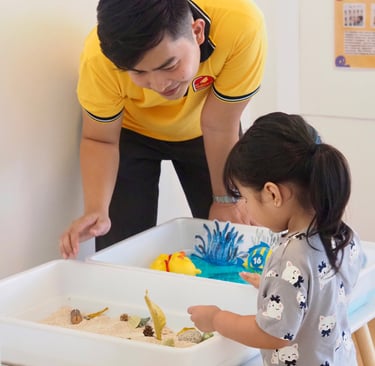
Before You Choose a Preschool, Pause for a Moment
Choosing a preschool often begins with practical questions. Is the school near our home? Are the teachers warm? Does the classroom look safe and welcoming? While these are all important, there is one question many parents do not realize they should be asking first:
How will my child actually learn here?
Behind every preschool program is a learning approach that shapes how children think, explore, communicate, and grow. Two schools may look similar on the outside, yet feel completely different once your child steps into the classroom. One may focus on independence and structure, another on exploration and collaboration, while others blend play, inquiry, and guided learning in thoughtful ways.
As You Read On
As you explore the different learning approaches below, you may find yourself thinking less about labels and more about your child. What excites them? How do they make sense of new experiences? Do they learn best by watching, doing, questioning, or creating?
At EduDash Qû Learning Hub, we see learning as a journey rather than a race. Children are not expected to move at the same speed or think in the same way. Instead, they are supported to learn at their own phase, guided by educators who observe closely and respond intentionally.
This belief shapes how we design our curriculum and how Flexi Think is embedded into everyday teaching and learning.
1. Reggio Emilia Inspired Learning
Seeing children as thinkers, not receivers
Reggio Emilia inspired learning begins with a simple but powerful view: children are capable of forming ideas, making connections, and expressing understanding in many ways. Rather than delivering information, educators listen, observe, and plan experiences that build from children’s interests.
Learning does not follow a fixed script. It evolves as children explore, revisit ideas, and deepen understanding over time.
Learning spaces are thoughtfully arranged to invite exploration. Open-ended materials, natural elements, and shared work areas encourage children to collaborate, experiment, and express themselves through different forms.
What this looks like in practice
A child wonders where rain comes from. Instead of giving an immediate explanation, educators invite children to explore the idea through conversations, drawings, water play, stories, and simple investigations. Over several days, children revisit the question, refine their thinking, and represent their understanding in new ways.
The focus is not on quick answers, but on meaningful thinking.
Children who often thrive in this approach
Children who are observant and expressive
Those who enjoy exploring ideas over time
Children who benefit from choice and autonomy
Learners who communicate through movement, art, talk, or play
How EduDash Qû brings this approach to life
At EduDash Qû, Reggio Emilia inspired practice is woven into daily facilitation through Flexi Think. Educators support children to:
Receive information through observation, experiences, and discussion
Respond by questioning, experimenting, and expressing ideas
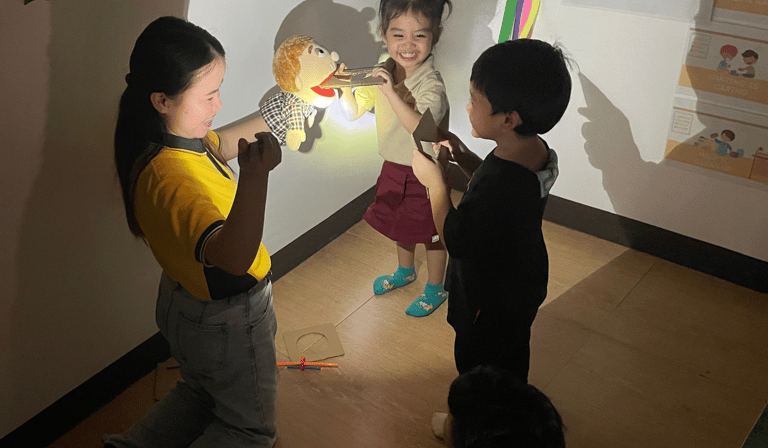
Recreate understanding through building, drawing, storytelling, or role play
This cycle allows children to revisit learning in ways that suit their developmental phase. Educators adjust their guidance based on what children are ready for, ensuring learning remains both flexible and purposeful.
2. Montessori
Developing independence through structure
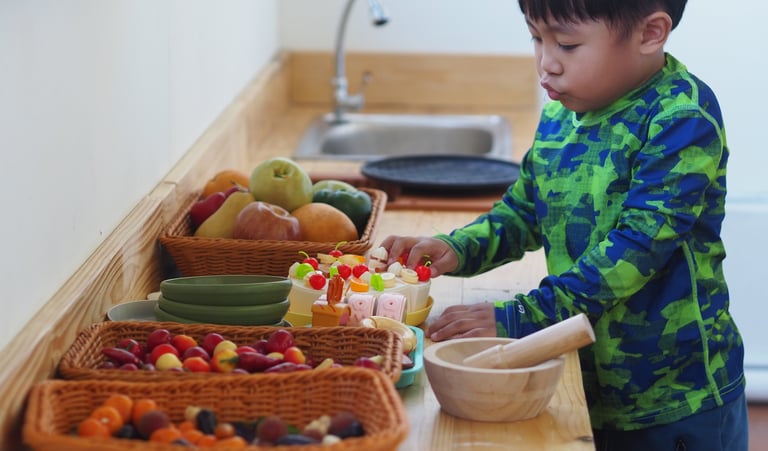
Montessori education emphasises self-directed learning within a carefully prepared environment. Children choose tasks independently and work on them for extended periods, developing concentration and practical life skills.
What it often looks like
Activities such as pouring, sorting, sequencing, and organizing materials are designed to strengthen fine motor skills, focus, and independence.
Children who may enjoy this approach
Those who prefer working quietly and independently
Children who enjoy routine and repetition
Learners who thrive with clear structure
A consideration for families
Some children may find Montessori environments limiting if they seek imaginative play, frequent collaboration, or expressive learning. Observing how your child responds to the environment can be helpful.

3. Play-Based Learning
Learning through meaningful play
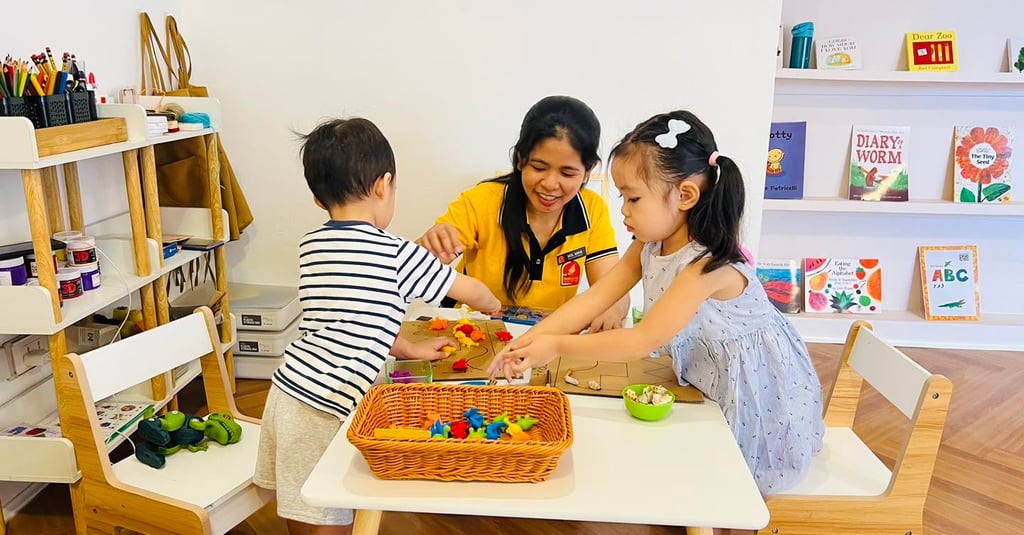
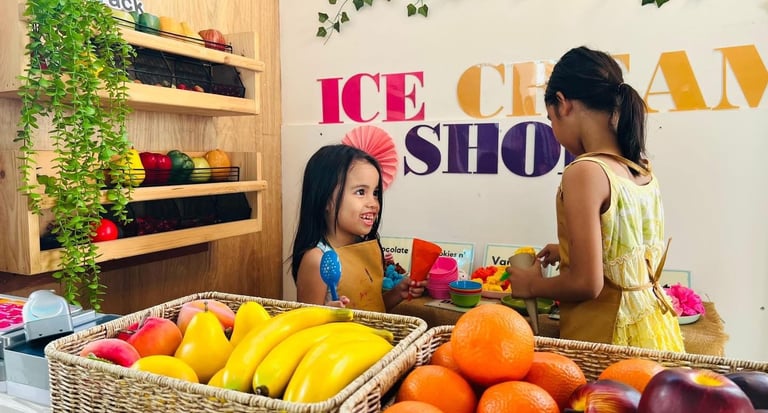
Play-based learning recognises that children learn best when they are actively engaged and emotionally invested. In well-designed environments, play is intentionally supported by educators to strengthen language, thinking, social interaction, and problem-solving.
This is not unstructured play. Educators observe play closely and introduce materials, questions, or challenges that extend learning naturally.
What it looks like
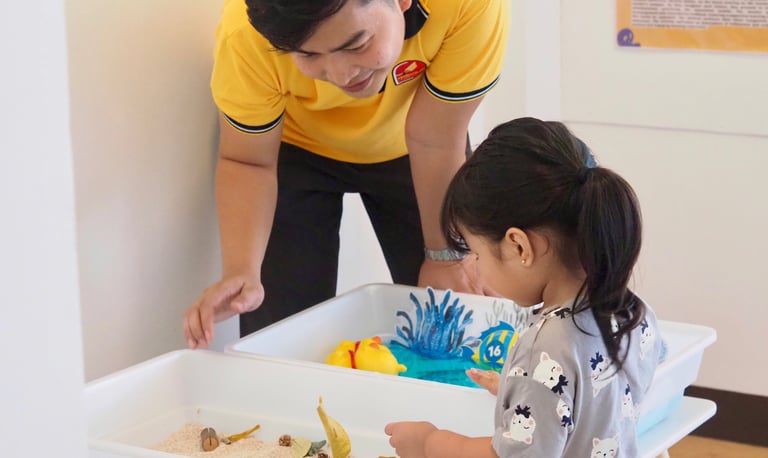
Children may engage in role play, construction, sensory exploration, art, and group games. Learning unfolds through interaction, negotiation, and shared discovery.
Children who often benefit
Energetic and expressive learners
Children who learn through movement and hands-on experiences
Those who enjoy social interaction and collaboration
Why families value this approach
Through play, children develop confidence, communication skills, and resilience. Learning feels joyful and relevant rather than forced.
At EduDash Qû, play is guided with intention. Educators support children to reflect on their experiences using Flexi Think, helping them make sense of what they are doing and why it matters.
4. Inquiry-Led Learning
Learning driven by questions
Inquiry-led learning begins with curiosity. When children show interest in a topic, educators help them explore it through observation, investigation, and reflection.
What this might look like
If children are fascinated by insects, educators may guide them to observe bugs, create simple habitats, draw what they see, count legs, compare sizes, and learn new vocabulary. Literacy and numeracy emerge naturally within meaningful contexts.
Children who often enjoy inquiry-led learning
Children who ask questions frequently
Those who enjoy experimenting and problem-solving
Learners who like discovering how things work
What parents often notice
Children become more confident thinkers. They learn to ask questions, explain ideas, and reflect on outcomes rather than memorising information.
So, Which Approach Is Right?
There is no single approach that suits every child. What matters most is whether the environment supports your child’s way of learning, thinking, and growing. Children benefit when they feel safe, understood, and supported to progress at their own phase.
When considering a preschool or learning hub, reflect on:
How your child approaches new experiences
Whether they need more structure or flexibility
How educators respond to children’s ideas and emotions
Whether learning feels meaningful rather than rushed
Why Families Choose EduDash Qû Learning Hub
Families often share that EduDash Qû feels different because learning is intentional without being rigid.
Our approach blends:
Reggio Emilia inspired thinking
Play-based and inquiry-led learning
Clear developmental guidance
The Flexi Think Learning Model
Educators are trained to observe carefully, respond thoughtfully, and adapt facilitation based on each child’s readiness. Children are encouraged to think, express, revisit ideas, and grow in confidence at their own pace.
At EduDash Qû, learning is not about rushing milestones. It is about building strong foundations for thinking, communication, and adaptability, while keeping childhood joyful and meaningful.